














En este artículo
If you only have one day to visit Vejer de la Frontera, it is more practical to organise your walk into sections than to try to tick off a list of places. The plan below follows a simple structure: arrive and leave the car, get your bearings in the historic centre, group the viewpoints, take a break and save the afternoon for anything still pending.
This is not a fixed route, and it does not depend on following an exact timetable. The timings are only a guide and may change depending on your pace, photography stops, the time of year and the conditions along the route. Before setting off, check opening times, access, parking and any temporary changes. You can also find more information about Vejer before planning your day.
Before starting your one-day route around Vejer de la Frontera
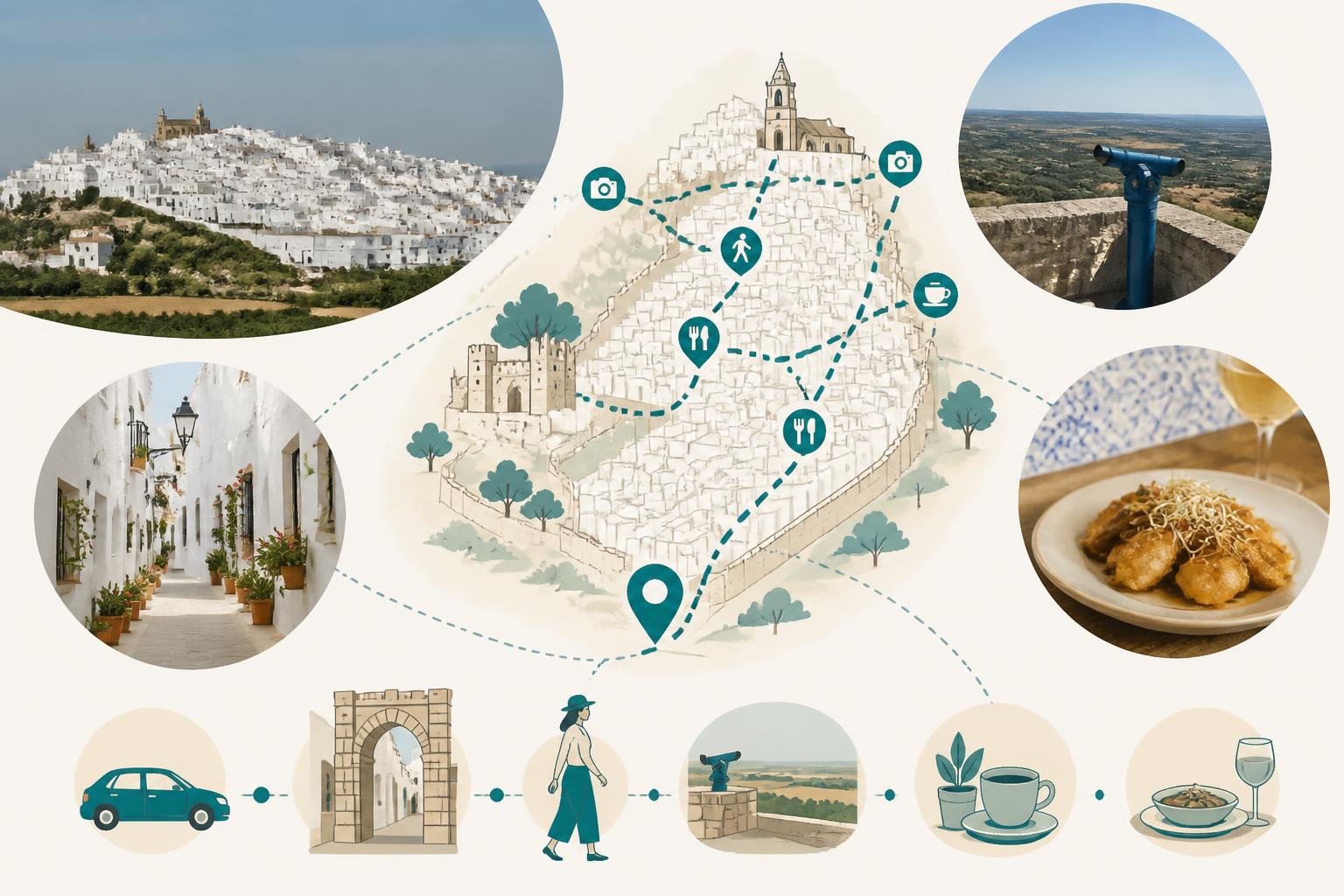
Think of the visit as a route involving four decisions: where to leave the car, which area to start from, which viewpoint suits you best and which part you are willing to leave out. This way of organising the day avoids unnecessary backtracking and leaves room to walk through the white streets without turning them into a task to complete.
The order below works as a mental map, not as an official measurement of distances. If your arrival point, the weather or tiredness suggest changing it, keep the general structure and move the stops around. The route should help you decide, not force you to follow a perfect itinerary.
Where is it best to leave the car when visiting Vejer on foot?
If you arrive by car, it is usually more practical to look for a place where you can park legally and then continue on foot, rather than trying to get as close as possible to the historic centre. This reduces manoeuvring and gives you a clear starting point for the walk.
Availability, signs and possible restrictions may change. Leave enough time for the walk to the start of your visit and check the directions you find when you arrive. This guide to where to park in Vejer de la Frontera may help you prepare your arrival, although you should still check the current situation. Allowing extra time for parking makes the day easier than trying to park right next to the centre.
What to bring for a relaxed walk through the historic centre
Choose comfortable shoes with good support. The streets may require more effort than they initially seem to when changes in level, standing stops and detours to look at façades or take photographs are combined.
Bring water, sun protection and a light layer if wind or a change in temperature is forecast. If you are travelling with children, older people or anyone who tires easily, decide in advance which viewpoint or section you would leave out if the walk takes longer than expected.
Morning: your first walk through Vejer’s historic centre
Once you have parked the car, begin with an orientation walk. Rather than immediately searching for every specific point of interest, use the main streets as a reference and notice how the squares, façades and narrower corners connect with one another.
This first section helps you assess the group’s actual pace. If you walk slowly or take lots of photographs, that is fine: the viewpoints and the break will still provide clear milestones. If you move easily, you may be able to add another stop along the way.
First section: getting your bearings among the white streets
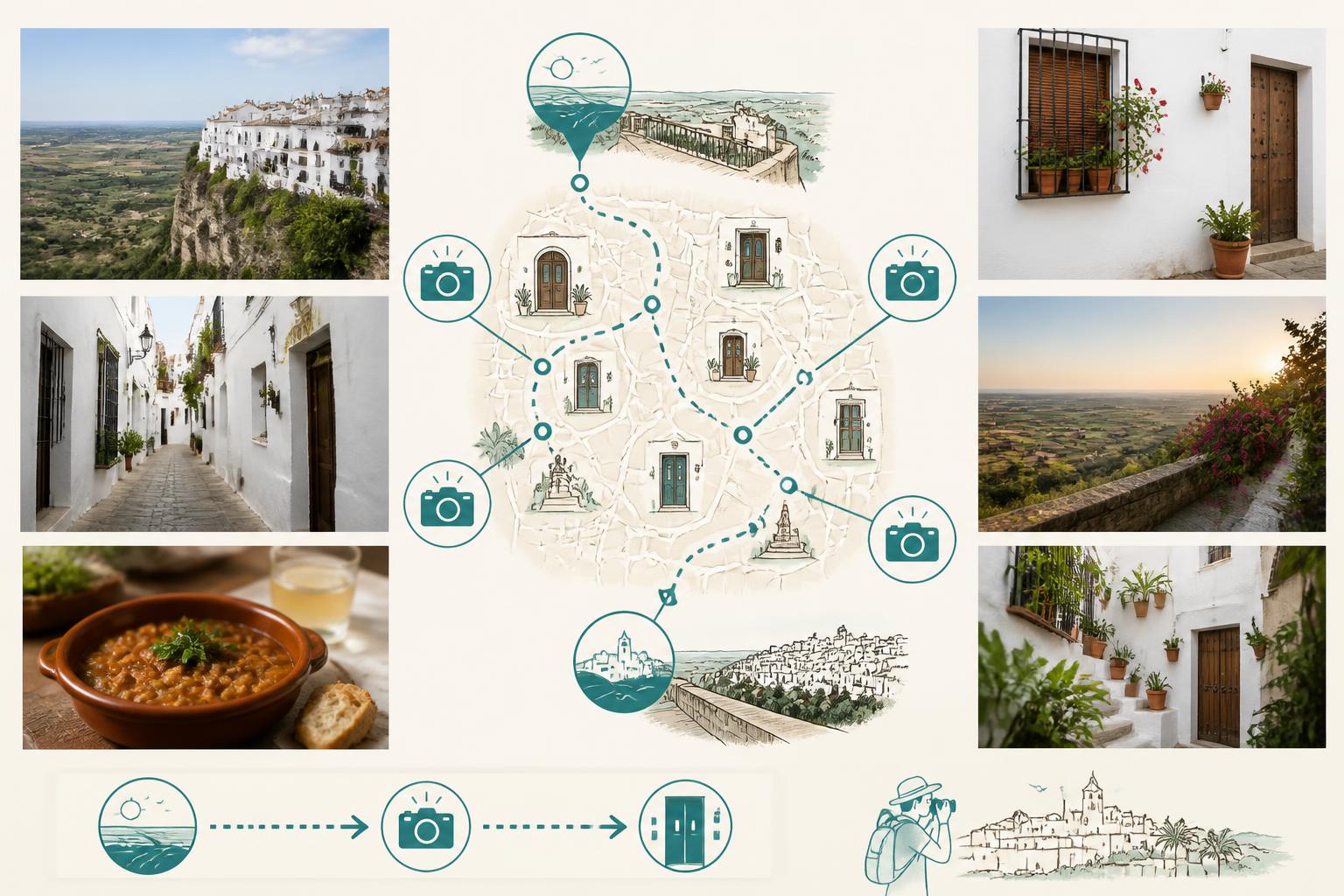
Walk in a general direction, but allow yourself to take small detours. The whitewashed façades, doors and changing perspectives are part of the visit; you do not need to enter every street to feel that you have explored the centre.
When you come to a narrow passage, stop to one side and let other people pass. You can also take a quick photograph and continue. The first goal is not to cover a distance, but to understand how the historic centre is laid out.
Second section: adding the Blue Door and other photogenic corners
Once you are familiar with the area, include Vejer’s Blue Door if it fits naturally with the direction of your walk. It works better as one specific stop than as the centre of a rigid photography route.
Take the time you need without blocking an entrance or street. If other people are waiting, take one photograph and continue towards the corners you find afterwards. If the Blue Door falls outside your natural route, leave it for the afternoon or skip it altogether.
Midday: viewpoints and a break for lunch

After the initial walk, grouping the viewpoints gives the day a clear second section. You can choose one as your main stop and add the other only if the incline, heat and energy levels of the group allow it.
Afterwards, set aside time to eat or rest. There is no need to decide this too rigidly: choose between a short stop to preserve time or a longer break to regain your strength. If you are looking for what to eat in Vejer, check beforehand that the information, menu and opening status of the establishment are up to date.
How to combine Mirador del Santo and Mirador de La Cobijada
One possible sequence is to visit Mirador del Santo first and then continue towards Mirador de La Cobijada. Do not treat this as a statement about the distance between them or as the only valid combination.
If you finish the morning closer to the second viewpoint, reverse the order. You can also stay at just one viewpoint if there is wind, heat, tiredness or poor visibility. Your choice should depend on your position and the conditions at the time, not on completing two names from a list.
What to do if you prefer a quick meal or a long break
A quick meal makes sense if you started early and want to keep part of the afternoon for walking. Even so, allow a few minutes to drink some water and sit down: eating quickly does not mean that you have to continue immediately afterwards.
If you feel tired or overheated, turn the break into the main rest of the day. Check the opening times, booking requirements and conditions of the establishment you choose, and avoid presenting a specific option as available without verifying it. Resting is also a way to make the most of Vejer.
Afternoon: a final walk and time to enjoy Vejer
Use the afternoon to complete one outstanding stop, revisit an area you enjoyed or walk without a specific destination. The morning structure will already have helped you experience the atmosphere of the historic centre and decide what deserves your final attention.
If the group still has energy, you can return to a viewpoint or look for other corners during the walk. If there is tiredness, heat or wind, sitting down and ending the route will be a reasonable decision. Keep the afternoon open so the visit does not become a race.
The light, temperature and visibility can change how the streets feel. For that reason, assess the route again when you reach each section. You do not need to chase a particular photograph or stick to the original plan if the conditions have changed.
Full route and a shorter version if you have less time
The full route is organised as follows: arrival and preparation, an orientation walk, the Blue Door if it fits, one or two viewpoints, a break and a final walk. This order allows you to remove one section without undoing the whole day, and prevents an initial delay from forcing you to rush every later stop.
For a shorter visit, keep the basic sequence and reduce the number of decisions: historic centre, one viewpoint and a break. We are not setting a fixed duration because the time available depends on your arrival, parking, pace and the access conditions you need to check. Reducing the number of stops works better than trying to see everything in a hurry.
What to keep when you can only take a short route
Start with a focused walk through the historic centre and choose one viewpoint according to where you finish that first section. The Blue Door can be included if it is on the way, but it is not worth making a long detour solely to photograph it.
Keep a break as well, even if it is a short one. If you have little time, remove the second viewpoint and secondary detours first; do not cut the rest so much that you end up walking in a hurry. A short route should be coherent, not a complete route taken at speed.
How to adapt the itinerary to heat, rain or wind
In hot weather, start early if possible, carry water and shorten exposed sections. In rain, group your movements together and leave the viewpoints until the weather clears, provided that the ground, wind and access conditions allow you to walk safely.
If it is windy, protect your belongings and consider taking a break in a sheltered space. A guide to what to do in Vejer in rain, heat, wind or cold may help you reorganise the day. Before leaving, check the forecast, opening times, access and parking.
If you ultimately need to change the order, return to the main rule: group nearby stops, choose one viewpoint and leave time to rest. You will still have a one-day route around Vejer de la Frontera, even if it does not exactly match the original plan.