








En este artículo
Vejer de la Frontera is a municipality located in the province of Cádiz, in the autonomous community of Andalucía, Spain.
Known for its rich history and impressive natural surroundings, this charming village is in a strategic location and has geographical features that make it distinctive.
Where is Vejer de la Frontera located?

Vejer de la Frontera is located in the province of Cádiz, in the autonomous community of Andalucía (Spain).
Located in the La Janda region, Vejer de la Frontera covers an area of 264 km² and has a population of approximately 12,662 inhabitants.
It borders the municipalities of Medina Sidonia and Benalup-Casas Viejas to the north, Tarifa to the east, Barbate to the south and Conil de la Frontera to the west.
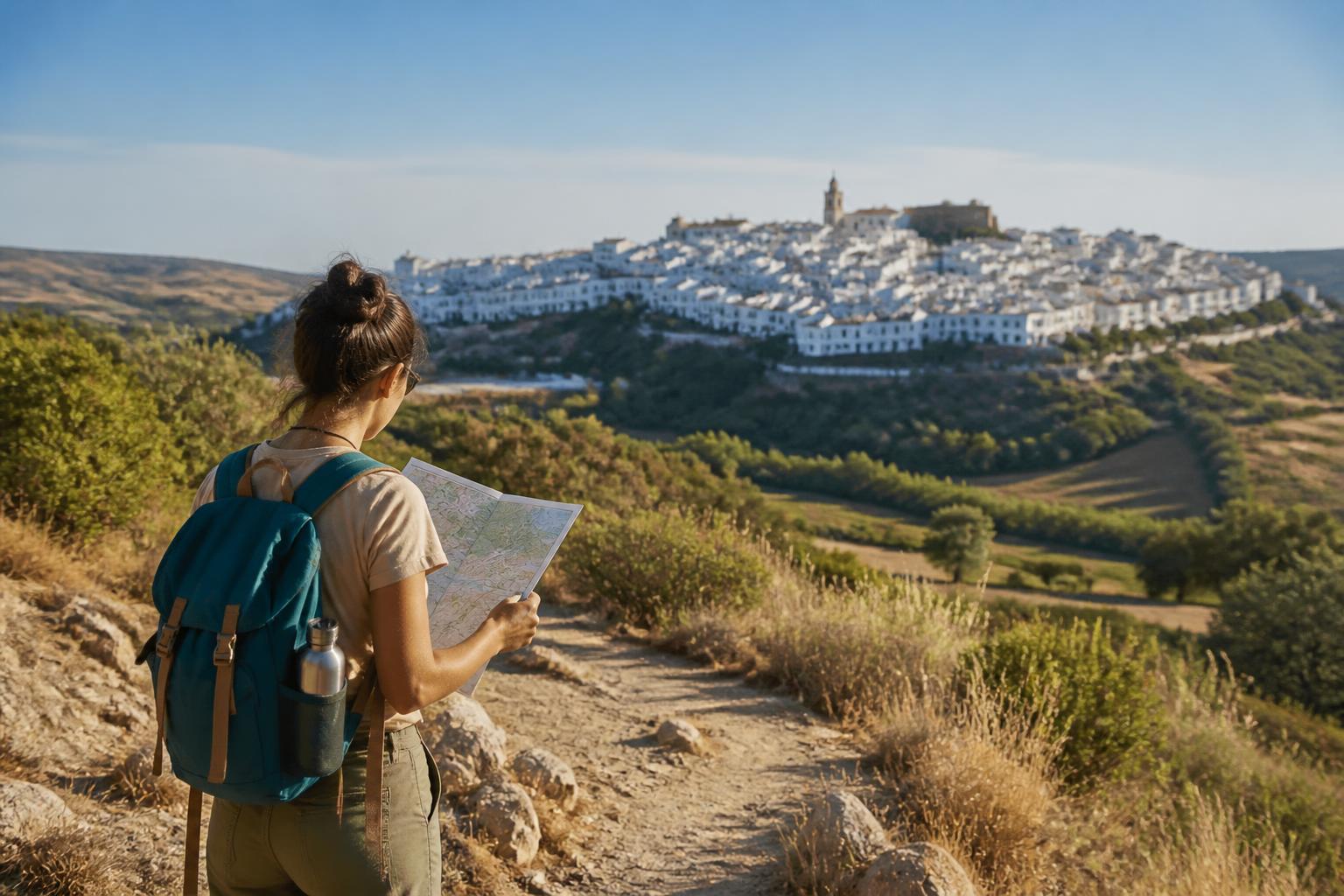
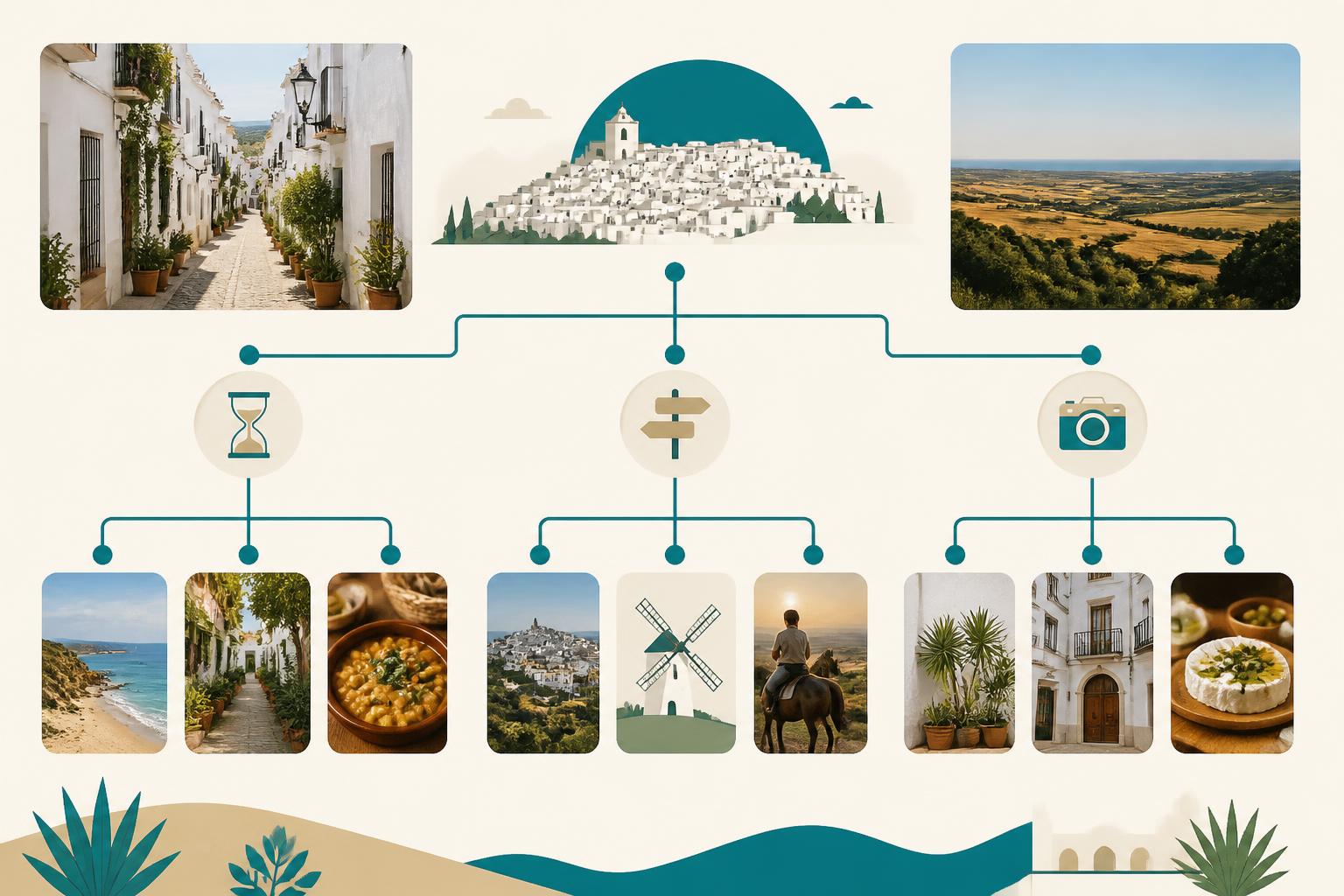
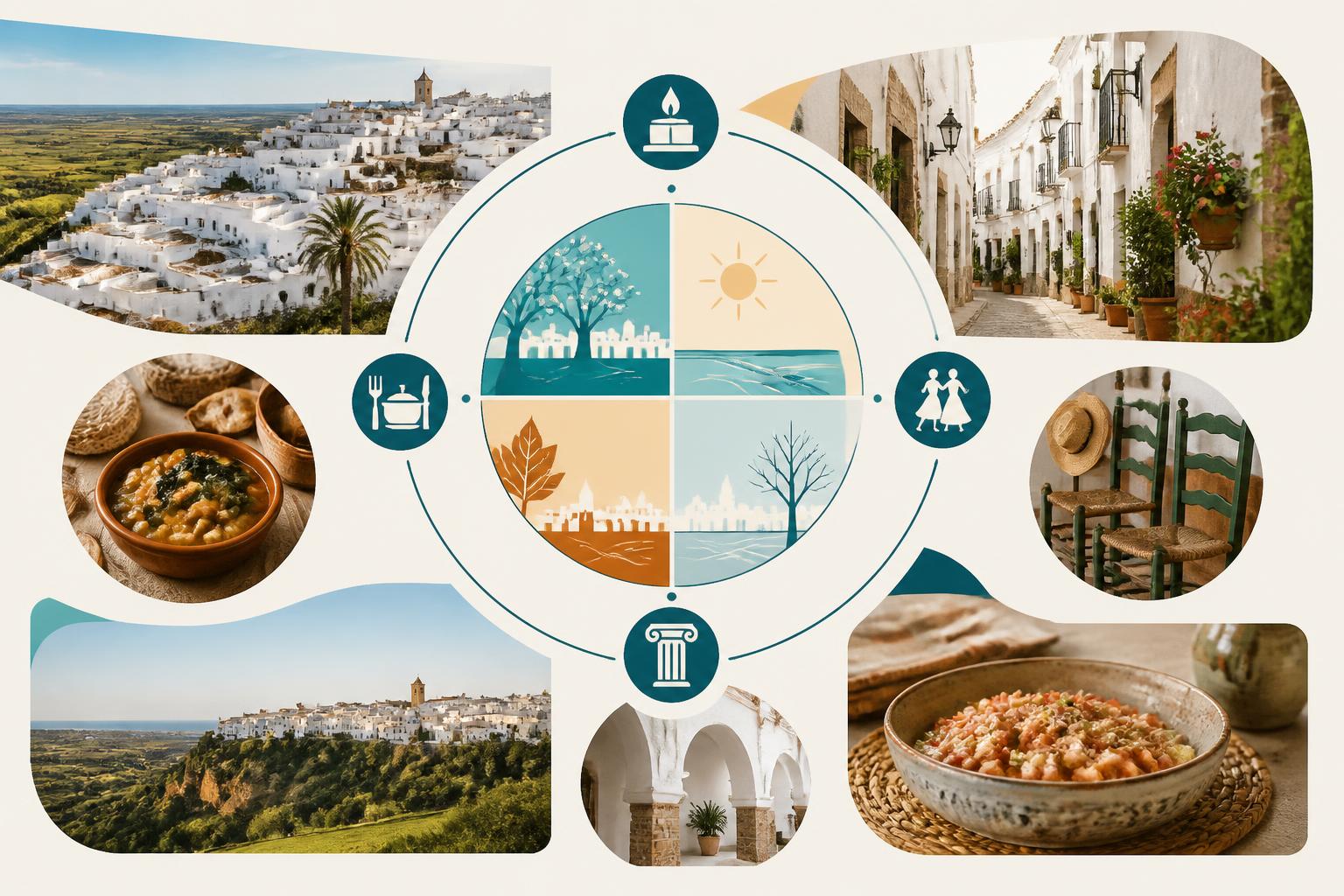
It is a walled white village built on a hill, with views across the surrounding landscape and a range of local activities and festivals.
A look at Vejer de la Frontera’s geographical diversity
Thanks to its location between the Mediterranean Sea and the Atlantic Ocean, Vejer de la Frontera has varied natural landscapes and local climate conditions.
From its beaches to the surrounding hills, this corner of Andalucía offers geographical diversity that shapes the views and activities available around the municipality.
The municipality is crossed by the Barbate River, which creates a fertile landscape. Its hills and higher ground also provide panoramic views and opportunities for walking and other outdoor activities.
Discover the population and its cultural importance

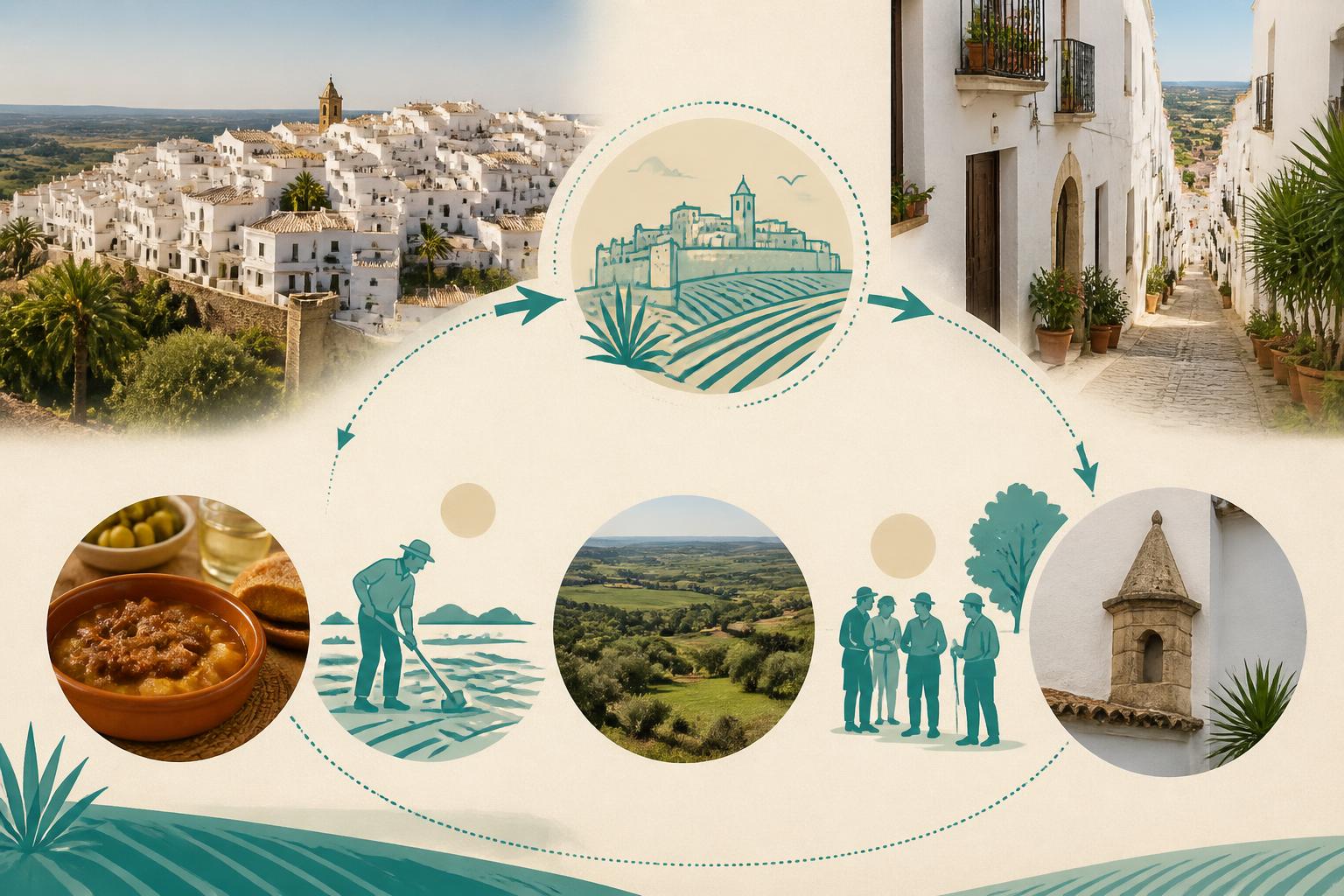
Vejer de la Frontera is more than the historic centre visible on the hill. The municipality also includes rural areas and outlying settlements, creating a wider territory with different landscapes, communities and ways of life.
This broader view helps explain the cultural importance of Vejer. Its identity has developed through its location, history, population changes and relationship with nearby villages and the coast.
A demographic overview of Vejer’s population over time
Throughout its history, Vejer de la Frontera has experienced significant demographic changes. During the Middle Ages, it reached its greatest splendour and had a large population because of its strategic importance as a frontier between the Christian and Muslim kingdoms.
However, in the 17th century, a plague epidemic and economic difficulties led to a decline in the population. As the economy recovered, the population began to grow again in the following centuries.
Outlying settlements and nearby places in Vejer de la Frontera
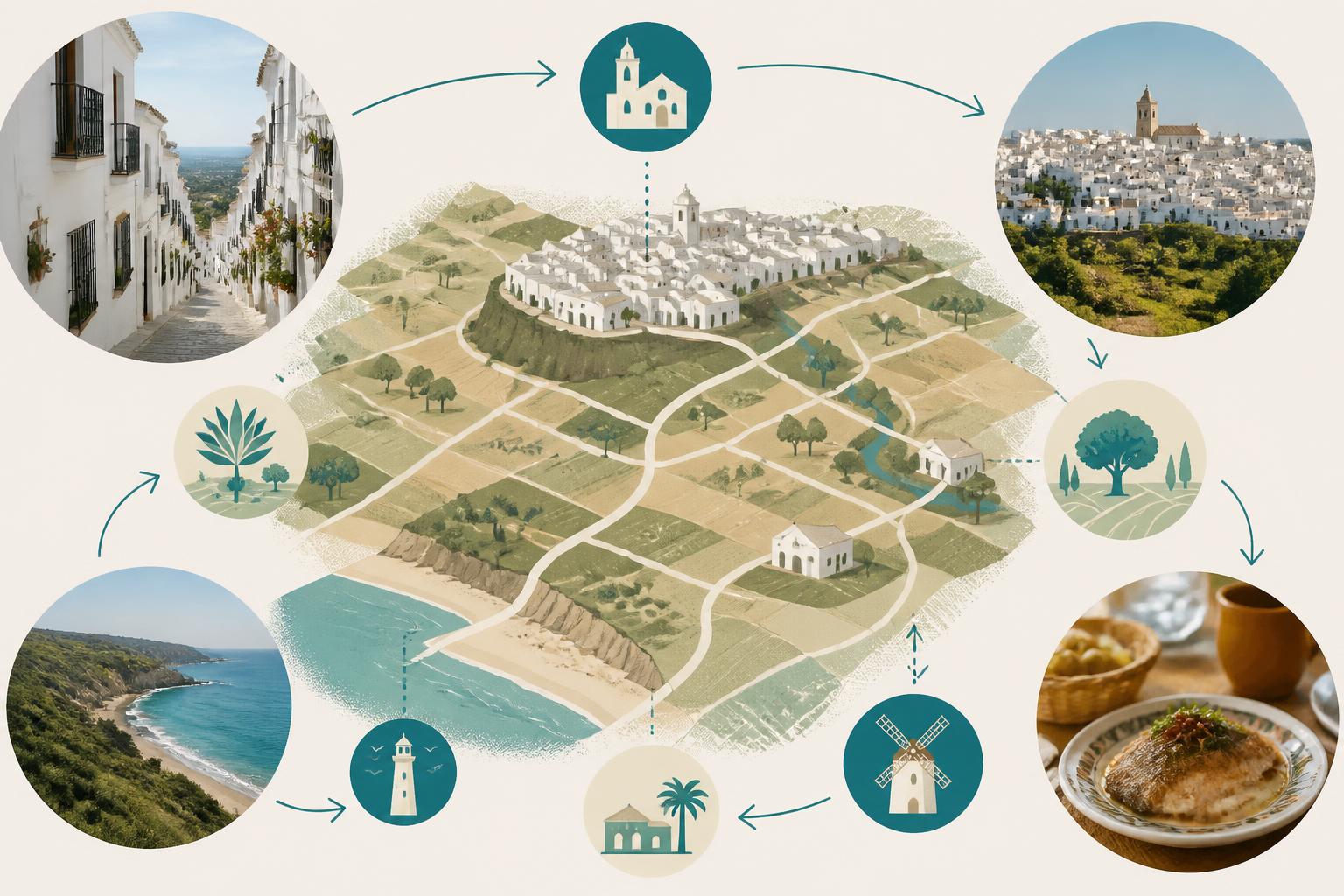
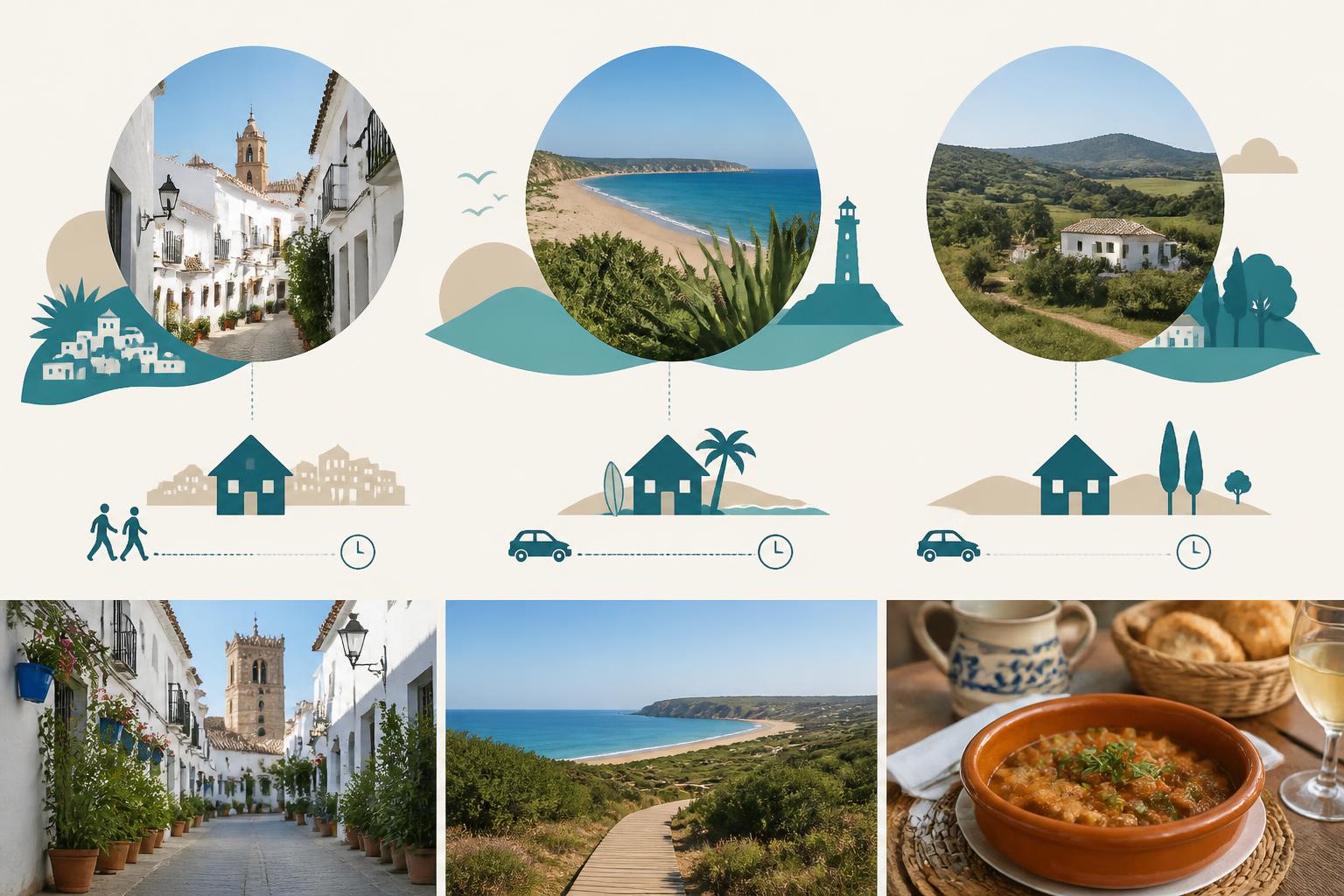
Vejer de la Frontera comprises several outlying settlements or nearby localities that form part of the municipality. They extend the experience beyond the central hill and connect the village with rural and coastal surroundings.
Some of the best-known settlements are El Soto, La Muela, El Palmar and Los Naveros. Each has its own identity and contributes to the area’s cultural and geographical diversity.
Exploring Vejer de la Frontera’s rich history

The history of Vejer de la Frontera can be read in its location, defensive features, streets and whitewashed buildings. Different periods have left traces in the town and help explain the appearance of the historic centre today.
When exploring Vejer, it is useful to look beyond individual monuments. The urban layout, narrow streets and relationship between the village and its surroundings also form part of its historical character.
Prehistoric origins and Arab influence
Vejer de la Frontera has a rich history dating back to prehistoric times. Remains have been found showing that people lived in the area as early as the Palaeolithic period. During the Roman era, the town had some importance as an agricultural and commercial centre.
The medieval period was particularly important in the history of Vejer de la Frontera. During this period, Arab influence was evident in the village’s architecture, urban layout and culture. Its narrow cobbled streets, white houses and castle bear witness to this influence.
Historical facts
Vejer de la Frontera also played a significant role in the Battle of La Janda, a conflict that took place in the 13th century and marked a milestone in the Christian Reconquista.
Vejer de la Frontera today
Today, Vejer de la Frontera is known for its historical and cultural heritage.
Its historic centre received the National Beautification Award and was named one of Spain’s Most Beautiful Villages.
Some places of interest include the Baroque Palace of the Marqués de Tamarón, the Mayorazgo House and the San Miguel windmills. You can also enjoy guided tours around the municipality to discover its attractions.
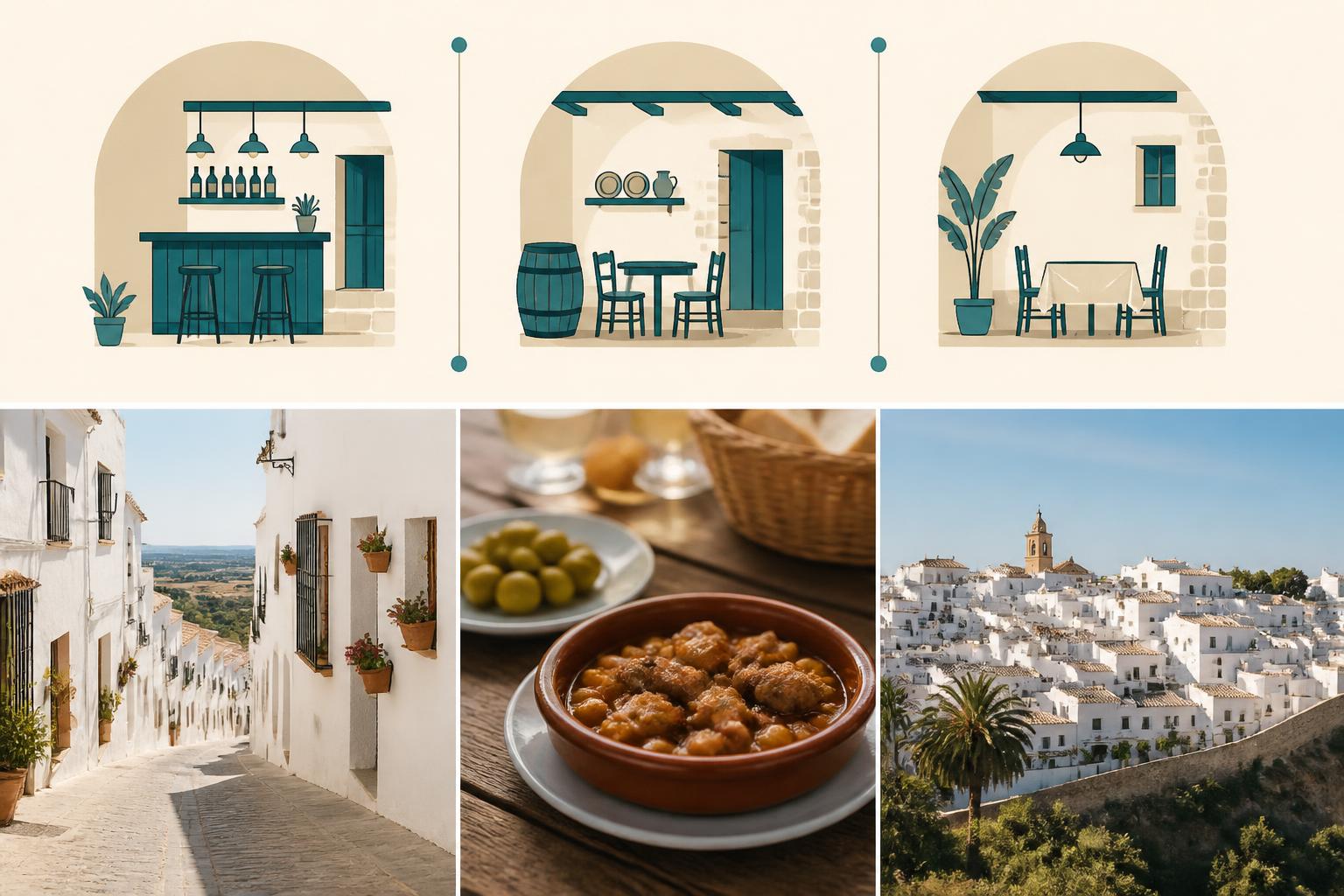
Local cuisine includes traditional dishes such as gazpacho, fried fish and fresh seafood. You can also sample some of the area’s typical sweets at the confectionery shop.
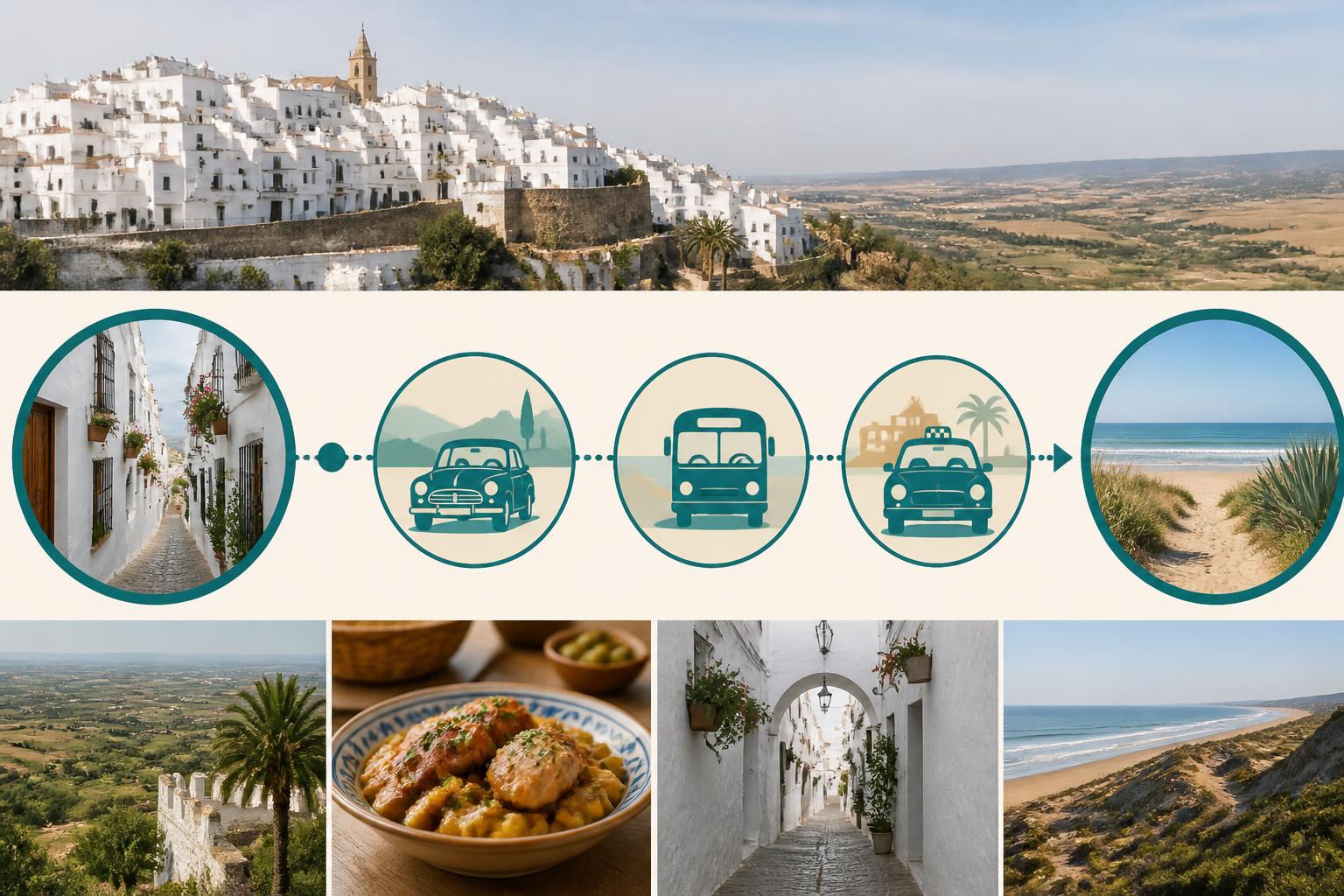
You can also relax on El Palmar beach, which is just a few kilometres from the village.
The Blue Door is another spot associated with walks and photographs of the historic centre. If you are planning to arrive by car, you can read more about where to park in Vejer de la Frontera before setting out.
If food is part of your plan, this guide to what to eat in Vejer can help you recognise local products and dishes while exploring the village.