














En este artículo
If you have already explored the historic centre of Vejer de la Frontera, you can extend your visit without turning the day into a series of journeys. Outside the centre, there are options involving viewpoints, the rural surroundings and the coast, although they do not all belong to the same area or can be reached on foot from the town.
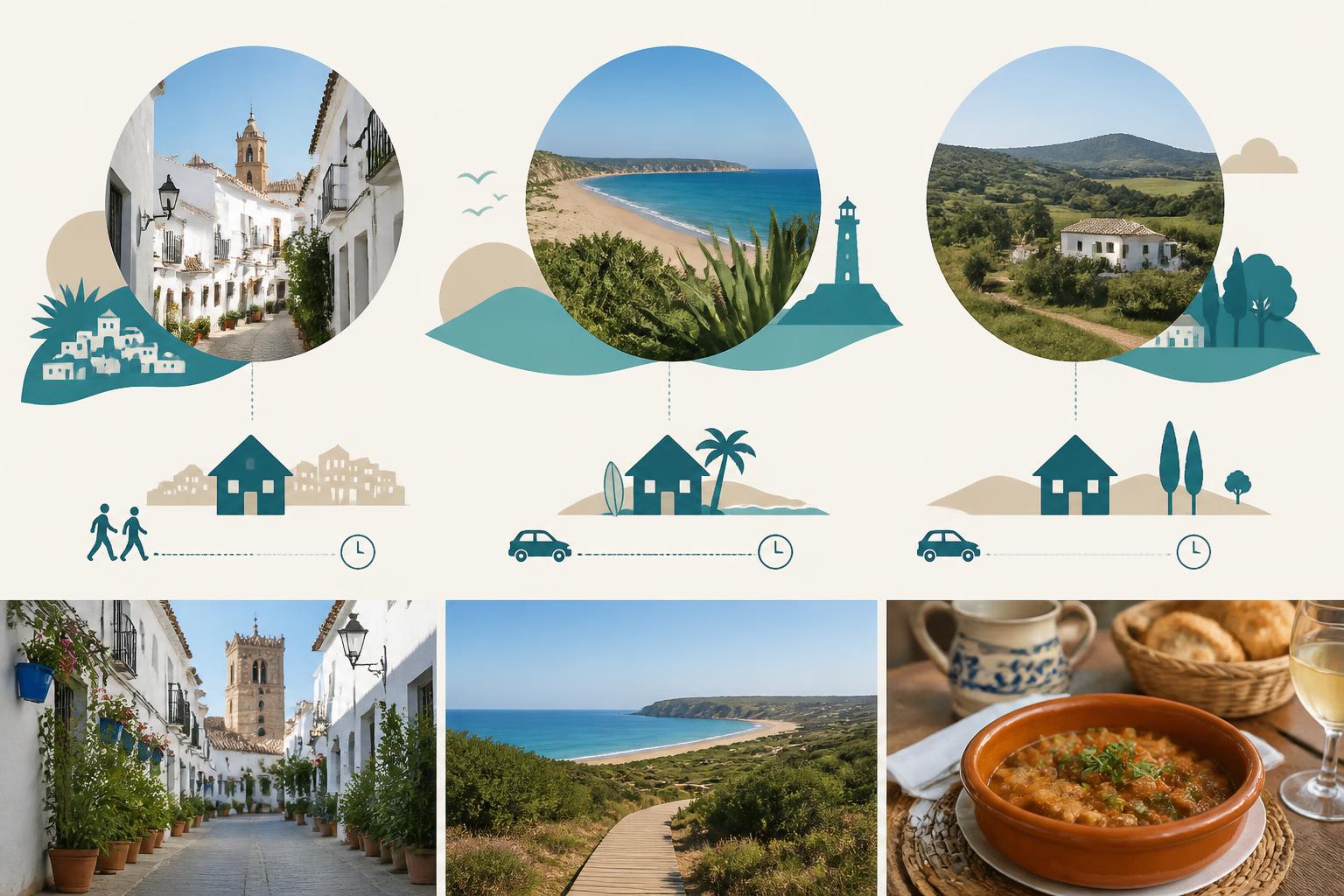
The simplest way to organise your plans is to divide the map into three areas: the outer parts of the municipality, the rural spaces and nearby destinations in other municipalities. Then choose one priority and adapt it to the time available and the transport you can use.
How to read Vejer’s map beyond the historic centre
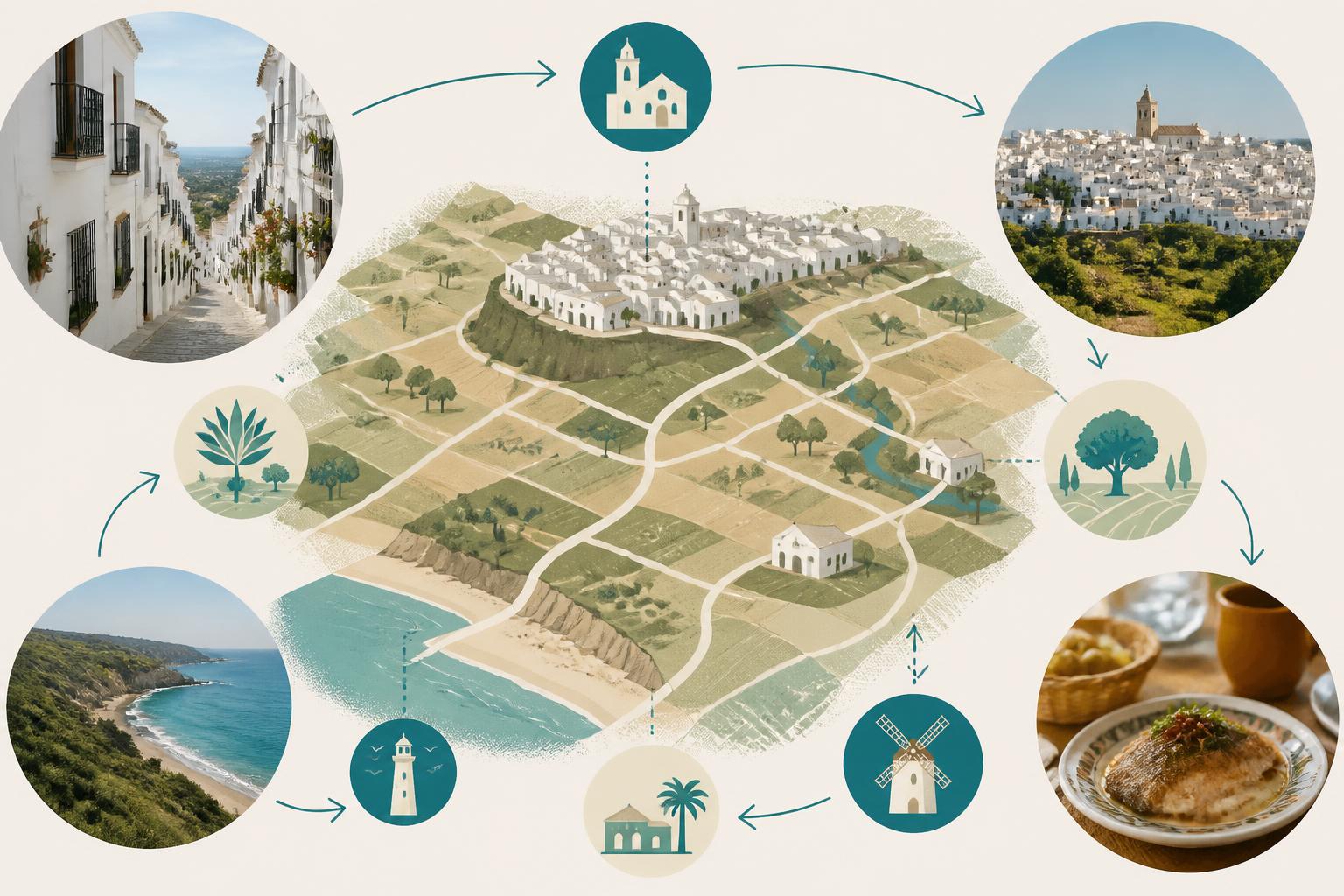
Visiting Vejer beyond the historic centre does not simply mean adding another street to your walk. Once you leave the centre, the distance, type of route and need for a car or public transport may change. You may also need to bring different things, especially if your plans include walking in the surrounding area.
For this reason, it is not useful to put everything on one list, including neighbourhoods, rural areas, hamlets, viewpoints and nearby beaches. Each option suits a different kind of visit. Some remain connected to the municipality of Vejer, while others are in nearby towns.
What is the difference between leaving the centre and visiting the area around Vejer?
An outer area of the municipality can be part of a visit focused on Vejer, even if it is not included in a walk through the historic centre. By contrast, travelling towards Conil, Barbate, Benalup-Casas Viejas or a nearby beach means planning another journey and checking the route you intend to take.
This distinction matters because it prevents you from planning the day as if everything were connected by one walk. Guides about the distances between Vejer and nearby towns can help you assess each trip, but they do not replace checking the route and current conditions before travelling.
What kind of landscape are you looking for outside the centre?
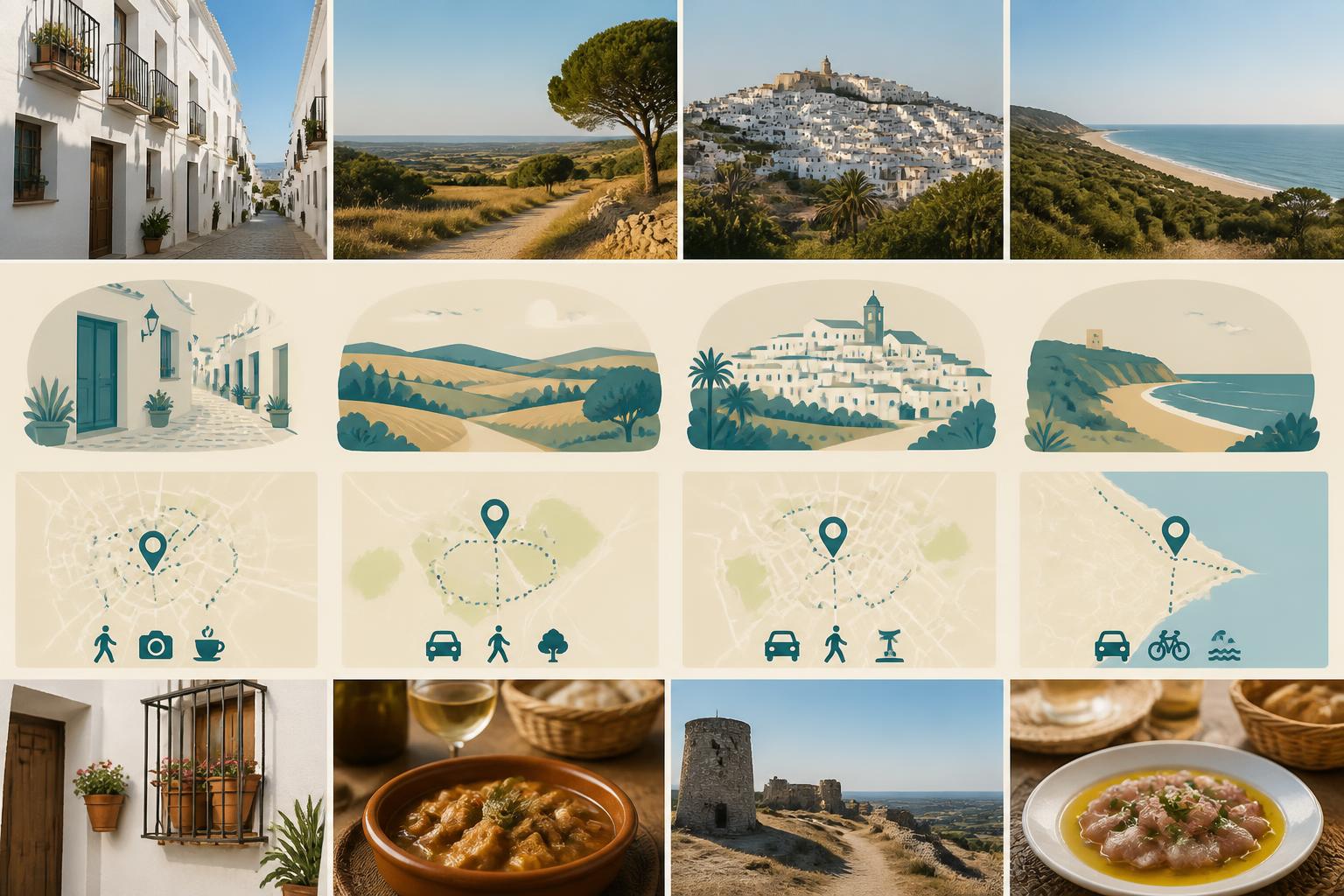
Choosing by landscape helps you avoid an unhelpful list of places. You may be looking for a wide view, a walk through the countryside, a less urban area or a trip towards the coast. Each setting requires a different amount of travel and preparation.
Your choice also depends on the group. A family with children, someone who prefers not to walk far or a person travelling without a car will not have the same practical options as someone with a vehicle throughout their stay.
Viewpoints and open landscapes to complete your visit
Viewpoints offer a simple way to change the pace after walking through the town centre. La Cobijada viewpoint and Mirador del Santo allow you to plan a stop focused on the views without necessarily turning it into a long route.
If you want to bring together several panoramic points and photogenic corners, you can consult this route through Vejer’s viewpoints. Before setting out, check the route you want to follow and adapt the stop to the time available, the heat and the mobility of the group.
Rural surroundings and walks that require more preparation
The countryside is better suited to a relaxed visit and to people who want to walk, but not all walks have the same difficulty. There is a difference between reaching an open area and following a hiking route that requires more orientation, time and preparation.
Take your footwear, water, the weather and the route into account. Check the elevation, available shade and the water you may need, without assuming that services are available if you have not confirmed them.
The coast and nearby beaches as a separate plan
The coast can complement a trip to Vejer, but it is best treated as a separate outing. El Palmar and other nearby beaches are not part of a walk through the historic centre, and some are in different municipalities, so the route and access should be assessed separately.
Information about beaches near Vejer can help you compare the general options. Before going, check access, parking, the weather forecast and the services available on the date of your visit.
What you can combine depending on the time available
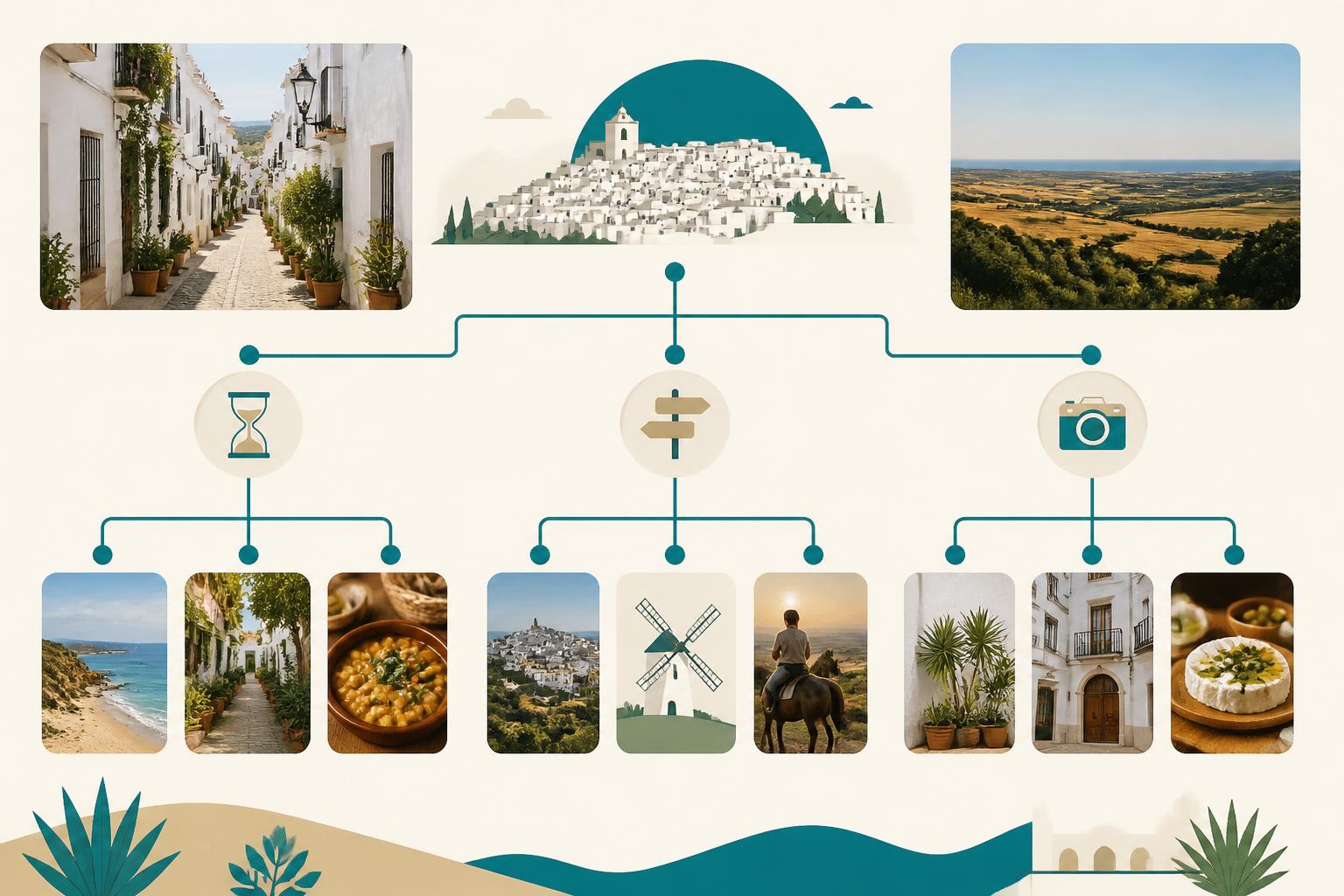
The time you have does not only determine how many places you can include. It also affects whether it is worth changing landscapes, returning to your accommodation or keeping a complete outing for another day. A simple combination is usually easier to enjoy than several distant stops.
The time of year, light, weather and starting point also influence the decision. The following suggestions are ways to organise your plans, not fixed itineraries with exact timings.
If you only have a few hours after the historic centre
With only a few hours, choose one category: a viewpoint, a short walk outside the centre or a quiet place to eat and rest. Adding a beach or a nearby town may leave little time to deal with the journey back.
If you are travelling with children or with people who prefer not to walk far, choose a straightforward option and avoid linking several stops together. The guide to visiting Vejer with children can help you consider slopes and walking paces before choosing.
If you have a full day
A full day allows you to combine two compatible settings, such as a panoramic stop and a walk through the surrounding area. The combination will be more reasonable if neither plan requires crossing several areas without knowing the actual distances.
If you prefer the coast or a nearby town, set aside the day for that outing. Checking the distances to Conil, Barbate or Benalup-Casas Viejas separately helps you understand that they are not simple extensions of a walk through Vejer.
If you are staying in Vejer for several days
A stay of several days gives you time to divide your visit by area. You could spend one day in the historic centre, another at the viewpoints or in the countryside, and another on the coast or in a nearby town.
You will also have more flexibility to change your plans if it is hot, rainy or windy. You do not need to visit every hamlet, neighbourhood or landscape in the municipality to get to know Vejer at a relaxed pace.
How to organise your visit according to your transport
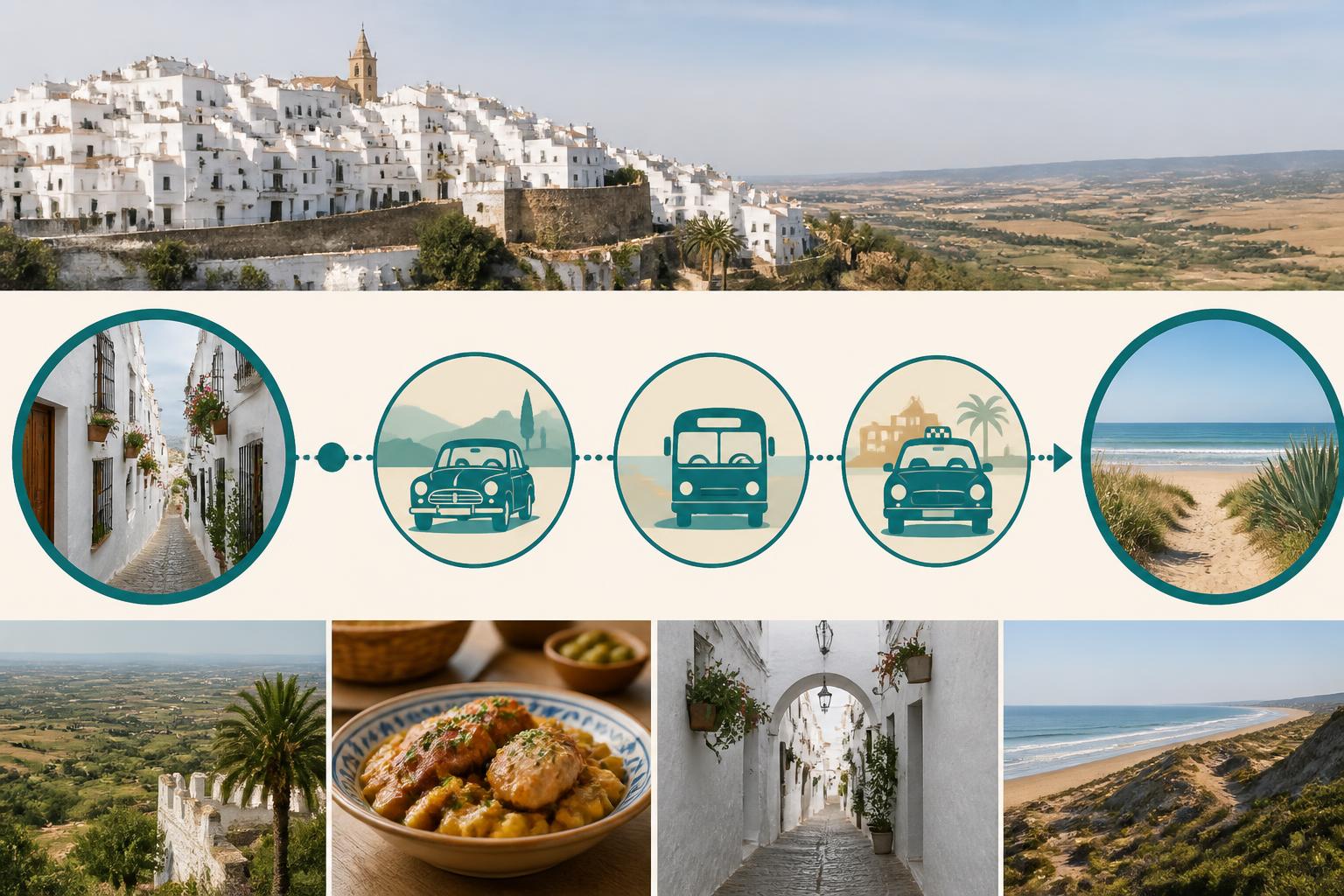
Transport determines which outer areas genuinely fit into your day. On a map, two places may look close, but the complete journey includes leaving, arriving, parking or finding a stop, and the final section on foot.
Think about the complete route before choosing. The final section can completely change whether a plan is practical, especially if you are travelling without a car or someone in the group has difficulty walking.
What to consider if you are travelling by car
A car makes it easier to combine areas, but it does not remove the need to plan. Check the route, signs, restrictions and where you can park legally before beginning your walk.
In and around the historic centre, it is not always practical to try to get as close as possible. The guide to parking in Vejer de la Frontera can help you organise your arrival and the walk that follows.
What to consider if you do not have a car
If you depend on public transport, confirm the available connections, the location of the stops and how to reach your chosen point from there. Do not assume that there is a direct service to every hamlet, beach, rural area or viewpoint.
The guide to reaching Vejer without a car points out that the journey does not necessarily end when you arrive in the municipality. If the final section is unclear, choose a simpler plan or confirm an alternative before leaving.
What to consider if you want to walk
Walking through an outer area is not always the same as hiking. A short walk may suit a relaxed visit, while a rural route can include slopes, uneven surfaces and sections without shade.
Consider your footwear, water, orientation and the weather. If the group walks at different paces, choose an option that allows everyone to return without turning a simple outing into a more demanding walk.
What to check before travelling beyond the historic centre
Outer areas require more preparation than a walk through the centre because your plans may depend on a road, path, connection, car park or particular establishment.
A quick check before setting out can help you avoid unnecessary journeys. Check only the information that genuinely affects your visit and leave room to change plans if conditions are not suitable.
Access, parking and route conditions
Check the road or path to your destination, directions, restrictions and where you can park. If you then need to walk, consider the elevation, surface and actual distance to the point you want to visit.
In rural or open areas, also check the weather forecast and any notice that could affect access. Do not base your plans on a car park, trail or service whose current availability you have not confirmed.
Opening times, services and last-minute changes
If your outing depends on a restaurant, a place open to visitors or public transport, check its updated opening times and access conditions. The situation may change outside the high season, on public holidays or because of temporary circumstances.
A flexible plan allows you to replace a specific visit with a viewpoint, a walk or a meal in another area. In this way, checking in advance helps you organise the day without turning it into a rigid itinerary.
A simple way to choose your next stop
To decide what to see in Vejer beyond the historic centre, follow four steps: choose the landscape, establish whether it belongs to the municipality or the surrounding area, work out how you will get there and check the final section.
If you only have a few hours, it is usually more sensible to choose one nearby, specific option. With more days, you can separate viewpoints, countryside and the coast. You do not need to cover the whole municipality in one visit: a simple, well-organised combination usually leaves more space to enjoy Vejer.