












En este artículo
Hiking in Vejer can suit very different plans, from a short walk around the surrounding area to a longer outing that requires more time, navigation and preparation. The key is not simply finding an attractive path, but choosing one that matches the group and the actual conditions.
Before setting out, it is worth checking the weather, the terrain, the water available and how easy it will be to return. This guide offers a simple way to assess these factors and decide whether to keep the plan, shorten it or leave it for another time.
Before choosing a hiking route in Vejer
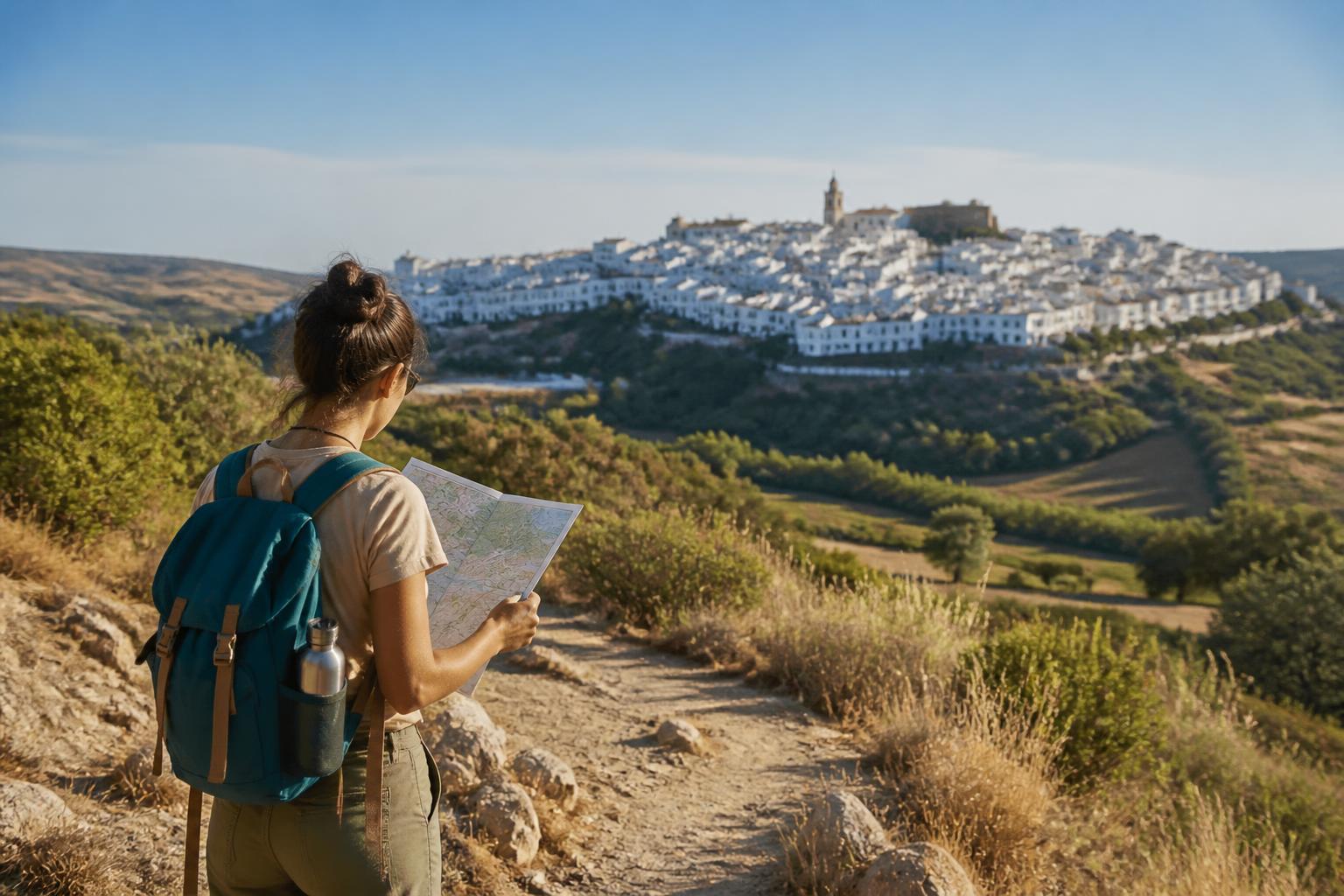
Hiking routes in Vejer can vary considerably depending on the type of terrain, the time of year and exposure to sun or wind. A recommendation that suits someone used to walking may not be appropriate for a group with children, limited experience or a slower pace.
Start by deciding how much time you have and what kind of outing you want. A simple walk with the option of returning soon is not the same as spending several hours on a less familiar route.
You should also consider who is taking part. Age, fitness, experience and the group’s pace matter just as much as the length of the path. If there are significant differences, choose the plan based on the person who will need the most breaks.
Before starting, check that the route information is still current. The condition of a path, a crossing area or its signposts may change. To complete a visit focused on walking around the municipality, you can also read this guide on Vejer with children.
How to assess difficulty without relying only on distance
The number of kilometres gives you an initial idea, but it does not explain on its own how much effort a route requires. Elevation gain, the type of surface, navigation and exposure can turn a short journey into a more demanding activity.
An uneven surface with stones, mud or slippery sections requires more attention than a uniform path. Similarly, walking without shade during the middle of the day can increase tiredness even when the distance seems reasonable.
Also consider whether the route allows you to shorten it or return easily. Being able to leave the route without complications is an important criterion when you do not know the area well or the group includes people with different levels of experience.
As a guide, you can classify the plan into three situations:
- Easy walk: a short route, terrain that is easy to understand and a clear return.
- Moderate outing: more time on foot, changes in surface or a greater need to organise water and rest breaks.
- Demanding activity: a longer route, less obvious navigation, greater exposure or few options for returning.
This classification does not replace specific information about the itinerary, but it helps you avoid underestimating a walk simply because the published distance appears short.
The conditions traffic light before setting out
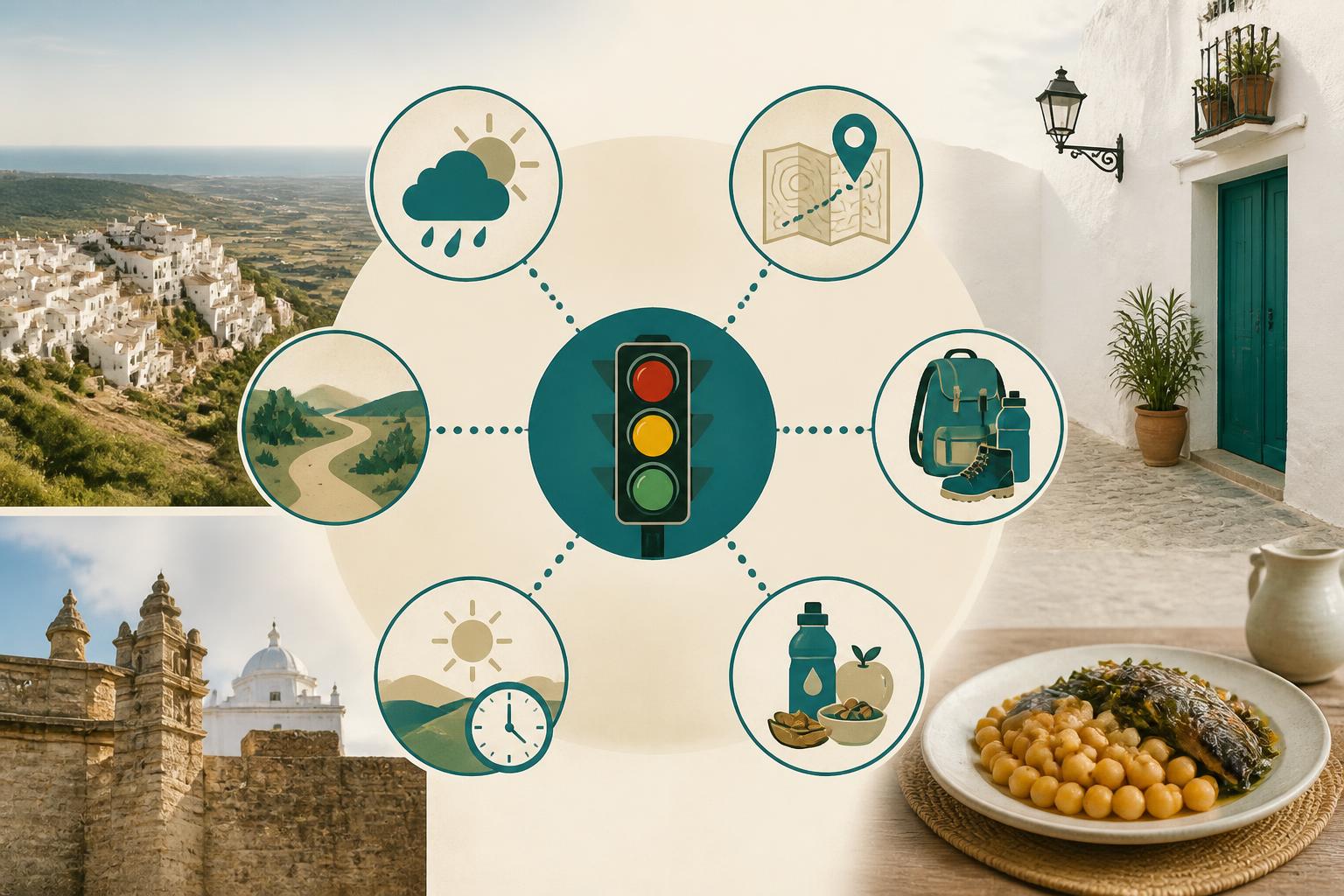
The conditions traffic light provides a quick way to check whether the plan suits the day and the people taking part. It is not a safety guarantee, but an organised way to identify signs that suggest continuing, adapting the route or postponing it.
Review these six indicators before setting off:
| Indicator | Green light | Caution or postponement |
|---|---|---|
| Weather | Stable forecast suitable for the effort involved | Intense heat, strong wind, rain or sudden changes |
| Terrain | Recognisable and passable surface | Mud, slippery areas or damaged sections |
| Water | Enough water for the plan | Inadequate supplies or no way to refill them |
| Shade | Possible stopping points and manageable exposure | Long sections without protection from the sun |
| Signposting | Understandable route and clear reference points | Detours, confusing marks or loss of orientation |
| Return | Simple return with enough time to spare | Difficult or late return, or no clear alternative |
If several indicators show caution, adapt the outing: reduce the walking time, choose an easier route or start at another time. When conditions are unclear, postponing is also a responsible decision.
Also check the route’s current condition before leaving. Rain, building work, maintenance, access changes or deterioration of the terrain can alter a route that previously seemed straightforward.
What to take when walking around Vejer
Your equipment should match the duration, season, terrain and distance from built-up areas. A simple walk may only require basic preparation, but a longer outing means planning more carefully for water, navigation and the return journey.
Footwear is one of the most important considerations. Choose a closed, comfortable option with good grip, especially if you expect uneven ground. Open sandals or unstable footwear can be uncomfortable and increase the risk of twisting an ankle.
- Enough water for everyone in the group.
- Sun protection, such as a hat, sunglasses and suitable sunscreen.
- Light, breathable clothing in hot weather, or easy-to-add layers if temperatures drop.
- A charged mobile phone and a power bank if the outing may take longer than expected.
- Simple food to help restore energy.
- Route information and an alternative way back.
For more isolated or longer routes, add whatever you need for navigation and to deal with minor unexpected situations. Carrying more equipment does not turn an unsuitable route into a safe one; choosing the right route remains the main decision.
The weather also determines what you should take. Sun, wind, rain and changes in temperature affect your pace and the terrain. Check an up-to-date forecast and avoid planning a demanding walk if conditions may worsen during the return.
Safety, weather and the return journey: when to change your plan
During the walk, observe whether conditions remain as expected. Heat can increase tiredness, wind can make it harder to keep your balance and rain can change the surface quickly. Do not wait until you are at your limit before deciding to turn back.
Before leaving, tell someone else the planned route, the approximate area and when you expect to return. If you change the plan, let them know as well. This simple step makes it easier for someone to know where to look for information if a problem arises.
If the path does not match its description, water runs low, signposts disappear or someone cannot continue, stop and reassess. You can return the way you came, shorten the outing or look for a known alternative. The aim is to return with time to spare, not to complete the route at any cost.
If someone feels unwell, dizzy or severely exhausted, or has difficulty continuing, prioritise rest, hydration and leaving the exposed area. In an emergency, contact the appropriate service and provide the most precise location possible.
To organise a visit that combines a walk with other activities, it may also be useful to read what to do in Vejer when the weather changes. If you arrive by car, you can also consult this guide on where to park in Vejer de la Frontera.
With this preparation, hiking in Vejer becomes easier to adapt. Check the route, assess the group, look at the weather forecast and always keep a reasonable margin for the return journey.