
















En este artículo
Choosing where to stay in Vejer for a weekend is not only about comparing rooms, photographs or facilities. When your stay lasts two nights, the location can make a significant difference to the time available for walking, eating out, visiting the coast or simply resting.
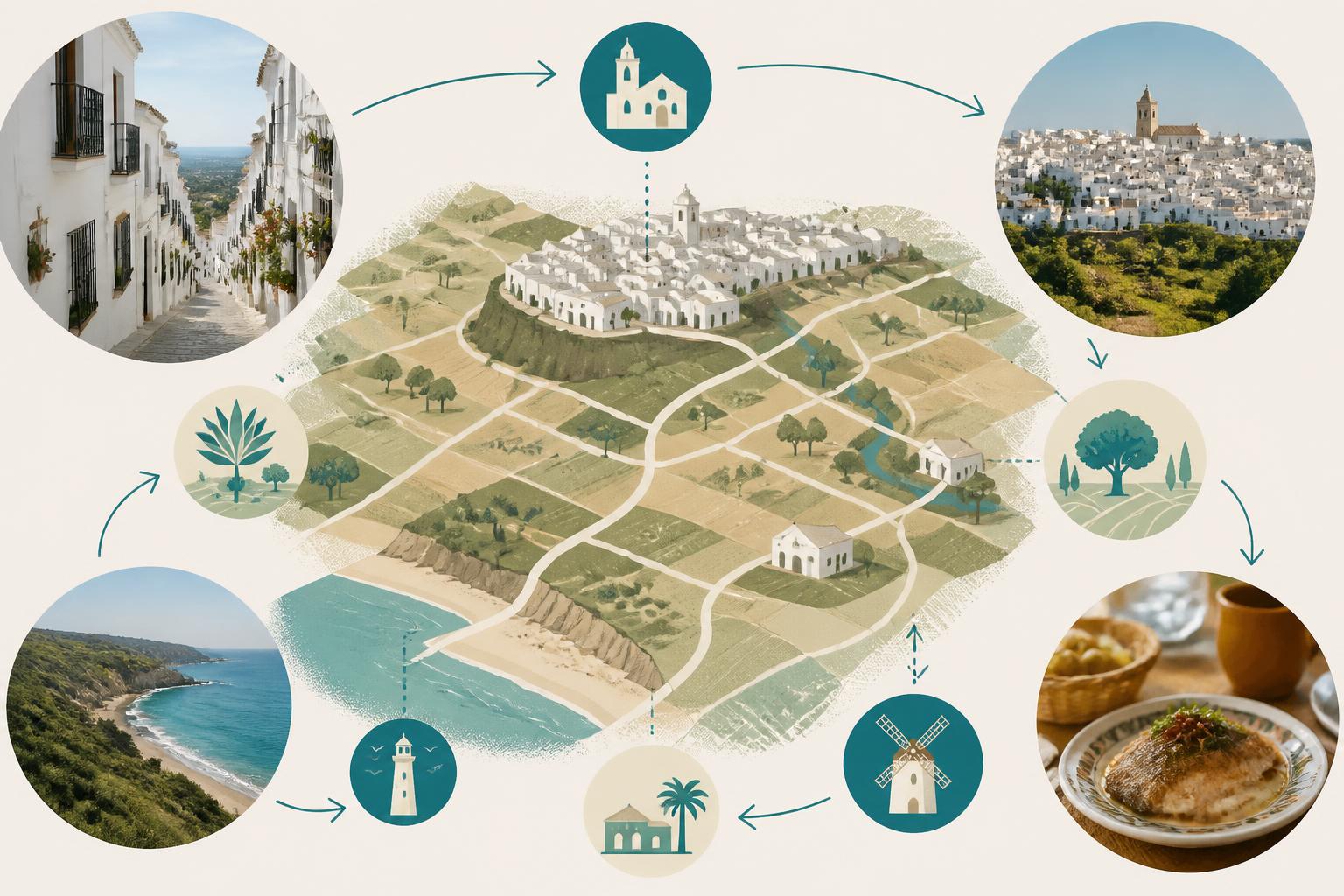
The decision usually comes down to staying in the town, choosing a rural setting or moving closer to the beach. Each option suits a different type of getaway and a different way of getting around. This guide helps you compare them according to whether you have a car and whether you want to prioritise the historic centre or the coast.
What changes when you only have two nights in Vejer

During a longer stay, an additional journey may not matter much. During a weekend, however, every trip takes time away from sightseeing. Arriving, parking, collecting the keys and leaving again are all part of the experience, even if they do not appear on your itinerary.
That is why it helps to consider your useful time: the actual hours left after you arrive and before you leave. Staying close to the places you want to visit may be more practical than choosing an attractive option that looks good online but is far from your main plans.
How to calculate the useful time of a short getaway
Start by separating the two nights from your arrival and departure periods. If you arrive in the afternoon on the first day and need to leave in the morning on the last, you will probably have one full day and two shorter periods to organise.
Then allow for the time needed to find the accommodation, park, settle in and travel around. You do not need to calculate every minute. Simply ask yourself how many times you will have to repeat the journey between your accommodation, Vejer and the coast.
What type of trip do you want to prioritise?
An urban getaway is about walking through the historic centre, discovering small corners, sitting down for a meal and enjoying the evening without turning every plan into a drive. In that case, being close to the town centre becomes more important.
A beach-focused stay works differently. Vejer may form part of the trip, but your base is chosen with the aim of spending more time near the coast. Before deciding, clarify whether you want to visit Vejer as your main destination or combine it with days by the sea.
Staying in the town: the most practical option for discovering Vejer
Staying in Vejer or in its immediate surroundings can make a getaway centred on the municipality easier to organise. Having the historic centre relatively close allows you to go for a walk without setting aside several hours for every journey and leaves more room for spontaneous plans.
That said, being nearby does not mean that every property offers the same access. Slopes, narrow streets, parking availability and the final walk to the door can make a considerable difference to how comfortable your arrival is.
When to choose the historic centre or its surroundings
This area is especially suitable if it is your first visit, if you want to spend much of the weekend exploring Vejer or if you would like to go out for dinner and continue walking without relying on the car every time.
It can also be a useful base for a short route around the municipality. You can consult this proposal for how to visit Vejer de la Frontera in one day to organise your route more effectively and avoid fitting too many stops into a few hours.
What to check if you arrive by car
Before booking, check the exact address and how close you can get to the entrance. In the historic centre, getting as near as possible is not always the most convenient option if you then have to manoeuvre, look for parking or walk with your luggage.
It is worth finding out where you can leave the car legally and how long the final walk is. The information about where to park in Vejer de la Frontera can help you plan your arrival more calmly.
How to organise a stay without a car
Without a car, staying in the town centre can simplify walks around Vejer, especially if the accommodation is well located for the areas you want to visit. The decision also depends on solving your arrival from public transport and the final journey to the door.
Getting to the coast or other parts of La Janda will require you to plan each outing further in advance. If your priority is walking around Vejer, eating out and enjoying the town, an urban base avoids adding journeys to an already short stay.
Rural surroundings and the coast: when the journeys are worthwhile
The countryside and the coast offer different settings from the town centre. A rural house or country property may suit you if you want a slower pace and would like the accommodation itself to play an important role in the getaway. The coast, on the other hand, makes sense when the beach is at the heart of your plans.
In both cases, you need to assess the distance in relation to the two nights available. The appeal of a place does not remove the time needed to travel there and back, or the need for suitable transport. Peace and quiet or proximity to the beach should compensate for the journeys you will actually make.
What a rural area adds to a weekend
A rural location may be suitable if you prefer a relaxed pace, closer contact with the surroundings and less activity around you. It is an interesting option when you do not need to enter and leave the historic centre repeatedly.
Its main limitation is mobility. With a car, you can combine the accommodation with a visit to Vejer, a meal out or a trip to the coast. Without a vehicle, arriving and getting around may require more careful planning.
When it makes sense to stay near the coast
The coast should be your priority if you want to spend much of the weekend at the beach and visit Vejer as one specific activity. In that situation, travelling into the town once may be more logical than using it as the base for every plan.
If you intend to explore the historic centre, have dinner there and visit several beaches as well, you will need to consider the order of your days carefully. You can develop your plans further with this guide on where to stay in Vejer or near the beach, which focuses on dividing your days according to the type of trip.
A quick comparison depending on whether you have a car
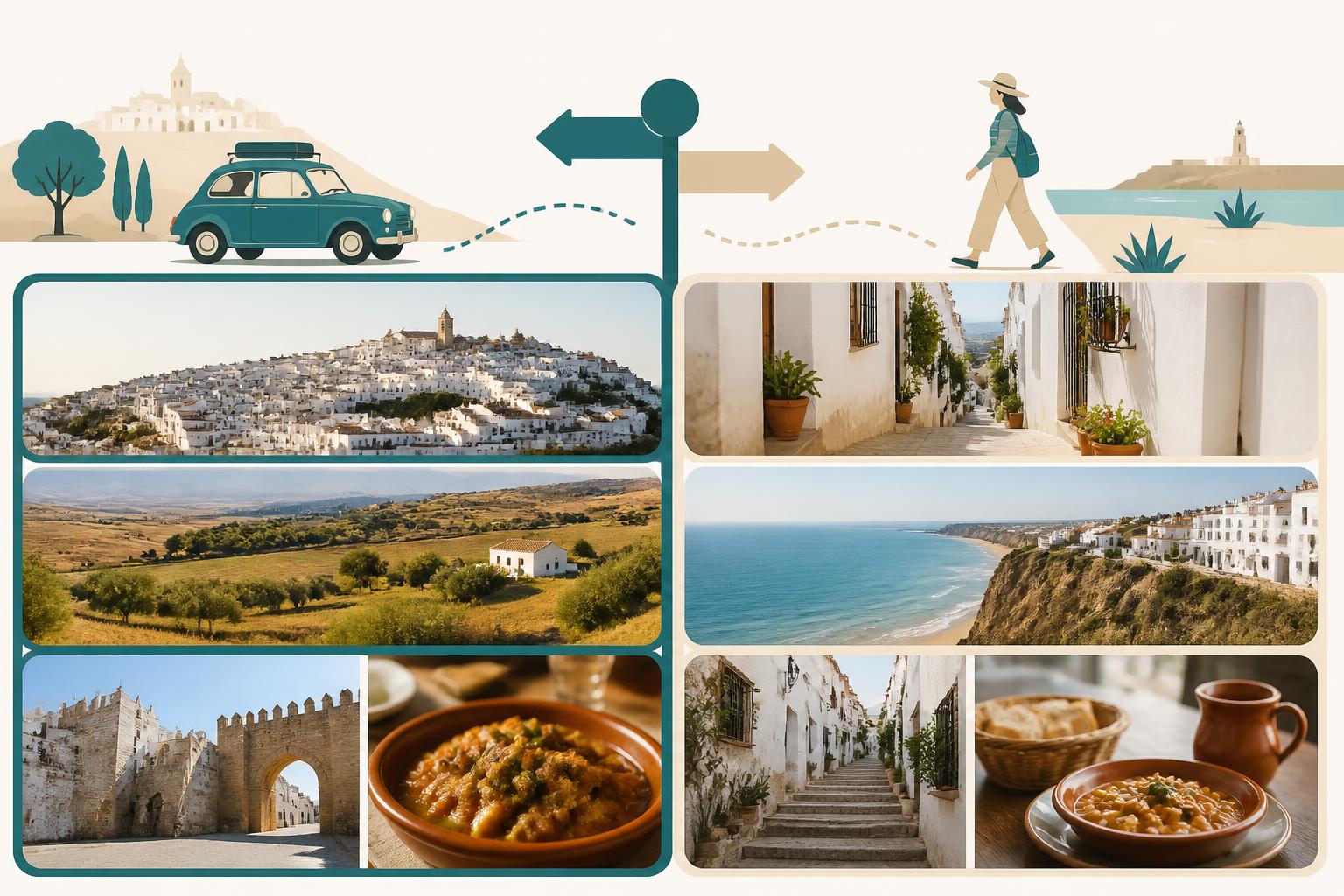
A car gives you more possibilities, but it does not make all locations equivalent. It makes it easier to combine the town, rural surroundings and coast, although it also adds parking, fuel and driving time. Without a car, being close to the main places becomes much more important.
| Context | With a car | Without a car | Suitable if you prioritise |
|---|---|---|---|
| Vejer town | A good base for visiting the historic centre and making occasional trips. | The simplest option for walking around the municipality, provided you solve the arrival. | Historic centre, food and walking. |
| Rural surroundings | Allows you to combine peace and quiet with excursions. | Can make journeys and access to different plans more difficult. | Relaxation and the surrounding landscape. |
| Coastal area | Makes it easier to prioritise the beach and travel into Vejer. | It is important to confirm connections and the final part of the journey. | Beach time and outdoor activities. |
As a practical rule, choose the town if you want to use every short part of the weekend to discover Vejer. Choose a rural setting if resting is a central part of the trip. Move closer to the coast when the beach is the main objective and Vejer is included as part of the route.
Having a car gives you more flexibility to combine areas, but you will still need to calculate parking and journey times. Without a car, prioritise a location that reduces travel and allows you to complete most of the getaway on foot.
What to check before booking two nights
A useful comparison does not end with the displayed rate. During a short stay, a small difference in location can affect parking, meals, fuel and the number of hours you can actually spend getting to know the municipality.
Review the accommodation information using the same criteria for every option. This will help you compare the real cost and convenience, rather than relying only on the first impression created by each listing.
Location, access and parking
Confirm the address, access by car and distance from the areas you want to visit. It is also worth finding out whether there is a section to walk, whether there are slopes and where you will leave the vehicle during your stay.
A location that looks close on a map may be less practical with luggage or when arriving at night. Consider the complete route from the main road to the door, not just the number of kilometres.
Conditions of the stay
Check the arrival and departure conditions, cancellation policy, cleaning arrangements, extra charges and equipment included. These details are especially important when you are booking only two nights and any problem affects a considerable part of the trip.
You should also confirm the accommodation’s specific rules and the conditions that apply to your dates. Information may vary according to the season, room type or booking method.
How to compare the total cost, not just the rate
To compare properly, consider the expenses linked to the location: fuel, parking, journeys to the coast, meals out and possible transfers. You do not need an exact figure to identify which option requires more movement.
Time is also part of the cost. If a location makes you repeat journeys during a two-night getaway, it may reduce the time available for walking or resting. The right option is the one that best fits your priorities and logistics.
Before confirming, make one final check of the address, access, parking, conditions and expected total cost. A well-chosen booking does not have to work for every possible plan; it needs to respond to the main reason for your visit.
If you are looking for more information to organise your visit, you can consult Vejer.com.es and combine this decision with guides about accommodation, parking and things to do in the municipality.